A late decision in Philadelphia
Nikola Vlasic’s late header settled a tense Group L finish: Croatia beat Ghana 2-1 in Philadelphia, taking second place behind England and confirming Scotland’s elimination. The result turned on a narrow margin. Ghana had drawn level with 17 minutes remaining, and the match appeared to be heading toward a point for each side before Vlasic’s goal restored Croatia’s lead.
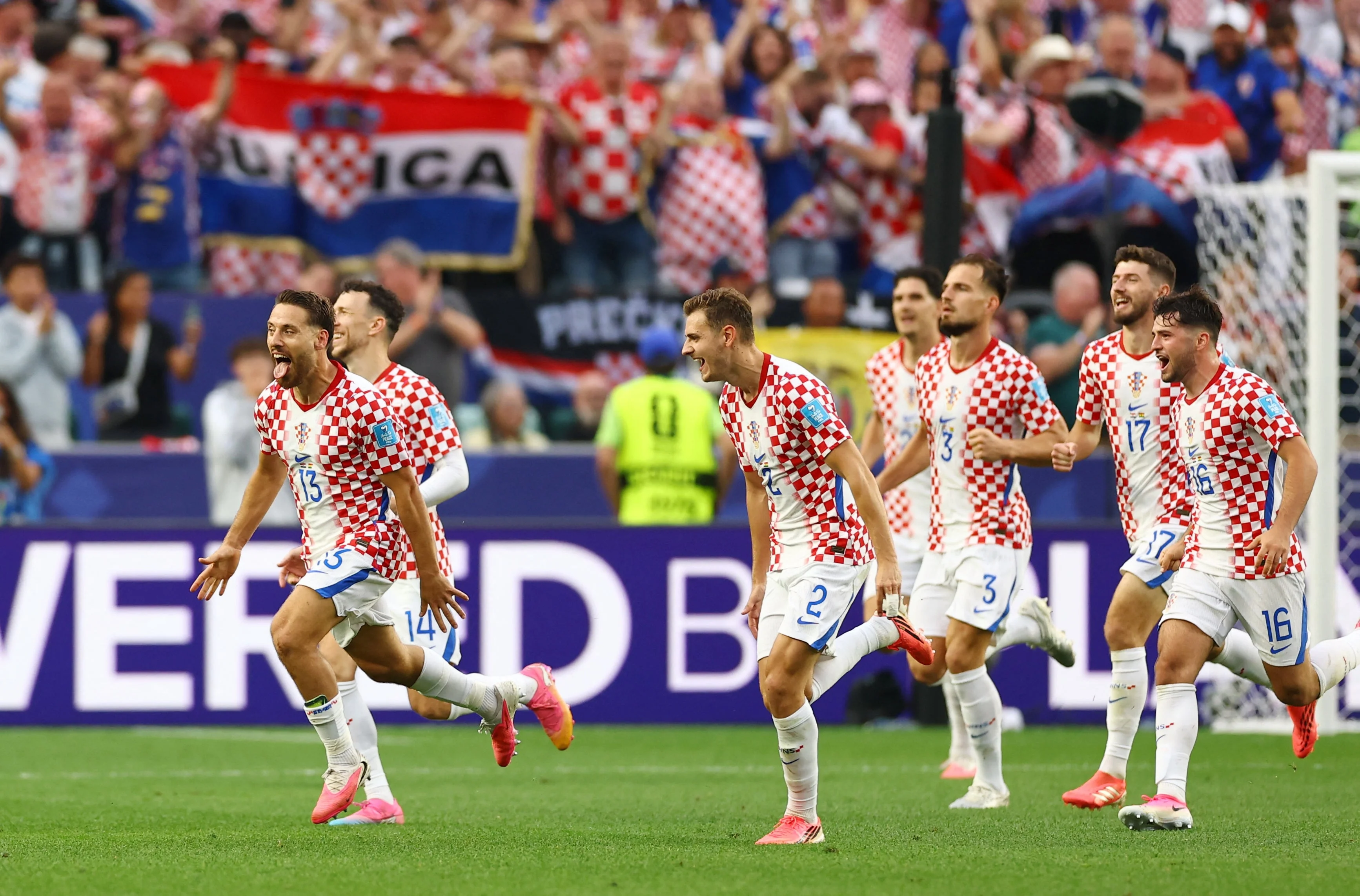
Both teams entered their final group match well placed to advance to the last 32. That raised the stakes without making the outcome straightforward: a team can spend much of a match in control and still see its position threatened by one set piece, one loose ball, or one moment of poor marking. Ghana looked set to take a point when Ernest Nuamah’s free-kick reached Derrick Luckassen, who side-footed home in the 73rd minute.
The equaliser gave Ghana a route back into a match Croatia had led, and it changed the closing phase from a question of protecting a lead to a test of how each side would respond. Set pieces are often decisive in tight games because they let a team create a scoring chance from a restart, even when open play has offered little space. Here, Ghana made its opportunity count. Croatia needed another answer.
Croatia’s response
Croatia had taken the lead earlier through Petar Sucic, whose long-range strike rewarded Zlatko Dalic’s side after their 1-0 victory over Panama had steadied a campaign that began with a 4-2 loss to England. The sequence gave the team a narrow margin for error: after losing heavily to England, Croatia had to recover enough ground to remain in contention for a place in the next round. Its win over Panama helped, but the final group match still carried the burden of deciding where the campaign would go next.
A long-range goal can change the shape of a match as much as its score. The defending side has to decide whether to press higher, protect its space, or keep playing with the same plan; the team in front must manage the risks that follow. Sucic’s strike put Croatia ahead, but it didn’t settle the contest. Ghana’s equaliser showed why a one-goal advantage can be fragile, particularly when the match is still open late on.
With seven minutes remaining, Luka Modric’s corner found Vlasic, who headed the ball off the inside of the post. The former West Ham forward’s goal secured the win and left Ghana third on four points. It was a precise finish from a familiar kind of opportunity: a corner puts the ball into a crowded area, where timing and positioning can matter more than a clear run at goal.
The post made the finish all the more narrow. A header that strikes the inside of the frame and crosses the line is a goal; one that clips the outside may leave the attacking side with nothing. Croatia got the favourable outcome at the point when a draw would have left the group’s final standings different. A small margin. A large consequence.
What the result means for Group L
Croatia finished second behind England and advanced from Group L. Ghana, on four points, ended third, while Scotland’s remaining route to the last 32 closed. Group matches are often judged not only by who wins, but by how each result interacts with the others. In this case, Croatia’s victory determined its own progress and also removed the possibility of Scotland advancing after its defeat to Brazil.
That result also closed the remaining route for Steve Clarke’s Scotland, whose campaign had ended with defeat to Brazil. Croatia, runners-up in 2018 and third in Qatar, now progress from Group L in second place. For Scotland, the consequence was final even though it wasn’t playing in Philadelphia: once Croatia won, the route that remained open on the group table disappeared.
For Ghana, third place on four points marks a campaign that remained competitive into the final match but didn’t produce a top-two finish. The team had been close to taking a point from Croatia after Luckassen’s goal, yet the late concession changed the result. There’s a clear difference between a performance that keeps a team in contention and one that carries it through. This match ended on that difference.
The wider significance of a late winner
This is more significant than it looks. A late goal in a group finale doesn’t just settle one match; it can determine who advances, who finishes behind, and which other team’s hopes end. That makes the final minutes a test of execution under pressure. Croatia found a decisive moment from a corner, while Ghana couldn’t preserve the position it had recovered after falling behind.
Similar group-stage situations often turn on a handful of incidents rather than sustained dominance. A team may have to balance the urge to chase a winner against the danger of conceding, while its opponent weighs whether to protect a draw or keep attacking. The source of the goal matters, too: Croatia’s winner came from a dead-ball delivery, not an extended spell of open-play pressure. That’s a reminder that preparation for corners and free-kicks can carry real weight in a close match.
And yet, one result doesn’t tell the whole story of a team’s tournament. Croatia’s campaign included a heavy defeat to England, a win over Panama, and now a narrow victory over Ghana. Those results point to a side that recovered from a difficult start and secured progression, but the group finish alone can’t establish how far it will go next. The next stage will offer a different test.
If you’re working in this space, the detail to watch is how teams handle the final stretch when the standings are in play. Croatia’s corner routine produced the winning goal; Ghana’s free-kick had earlier produced the equaliser. Both sides showed how a restart can shift the match. The result is clear, but the margin between advancement and elimination was thin.
PA